Hispanic American Diversity

81

By gamergirl

Written July 6, 2008 by Gamergirl for Axia College / University of Phoenix Cultural Ethics class.

Overview

According to the United States Census Bureau's reports, (2006) roughly 15% of the population of the United States identified as Hispanic at about 43 million people. The casual observer may believe this nationality to be the same throughout, but just as Caucasian Americans are different, so are Hispanic people. Explored within are the Mexican-Americans, Puerto Ricans, Cuban-Americans and Brazilian-Americans.

Mexican-American

Mexican-Americans may speak Spanish as well as English, to varying degrees of success. In recent years, companies nationwide have shifted to a more language friendly method of doing business, incorporating the option to read/hear functions in Spanish at machines such as ATMs and checkout counters. While the language barrier is not so vast now as it was a few decades ago, it still exists. Organizations such as the National Association for Bilingual Education work to break the gap between English and Spanish.

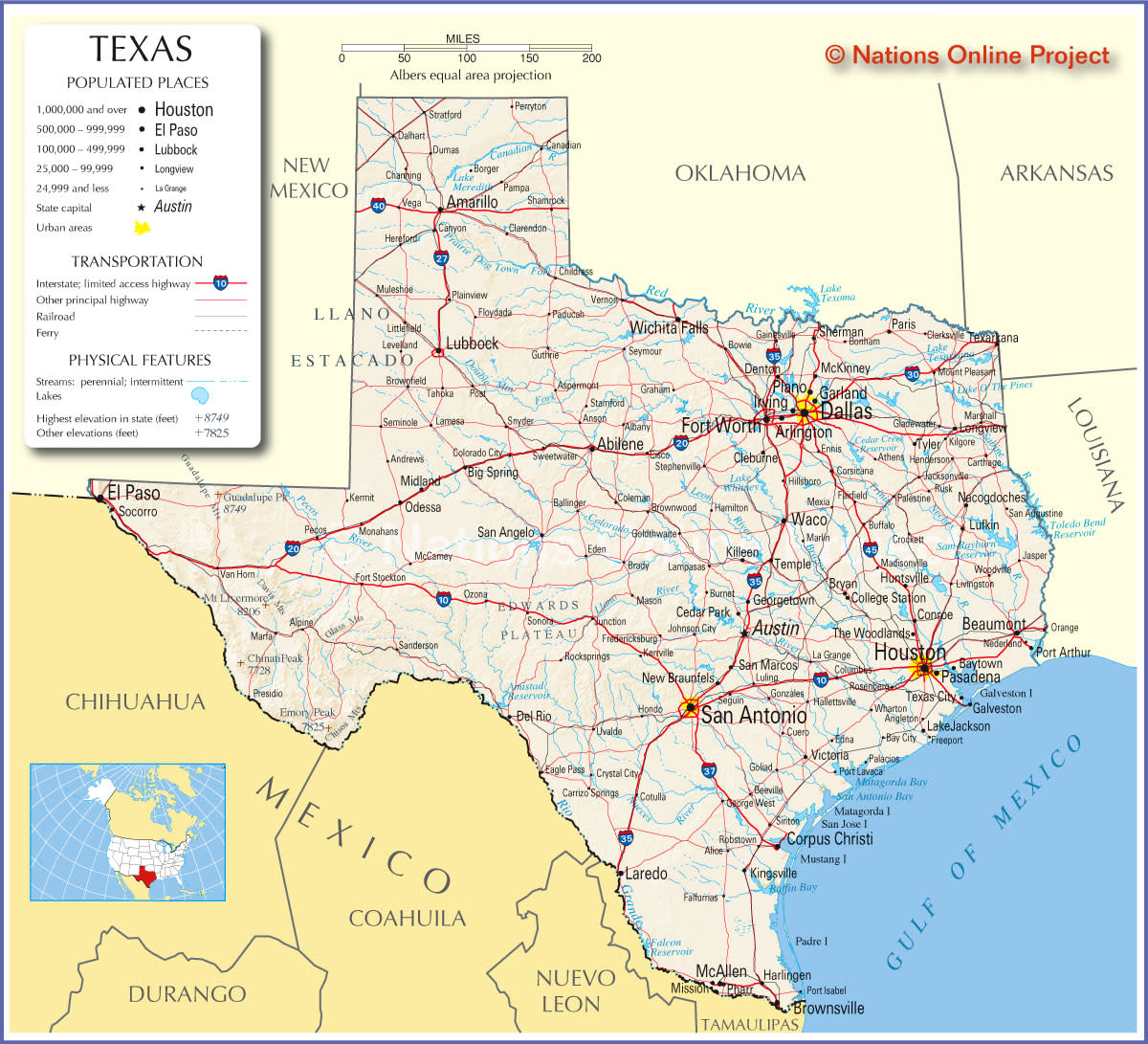
As the largest "subculture" within the Hispanic header, Mexican-Americans "comprise almost two-thirds of Hispanic Americans," statistics show (MexicanAmericans, 2007). Within these numbers are found people of all skill types and education levels, giving Mexican-Americans, like other Hispanic groups, the ability to locate employment within any area of expertise, even in local, state and federal government positions.

Home life for a Mexican-American person is likely to be family oriented, though more prone to poverty the number of mental illnesses is reportedly lower (Mexicanamericans, 2007), and politically speaking only one issue directly affects the Mexican-American population is the debate regarding the Mexican-American borders and the efforts which should be made to further secure them against illegal immigration.

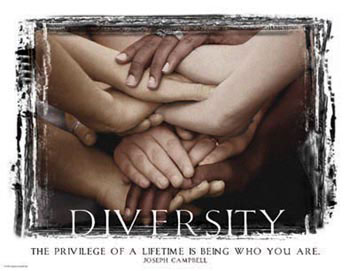
Click thumbnail to view full-size
Retrieved from winona.edu

Brazilian Americans

Unlike other Hispanic Americans, Brazilian Americans speak Portuguese, a romance language similar to Spanish. Brazilian Portuguese is different from Portuguese spoken in Portugal, with more words in its retinue and a softer method of speaking. Portuguese is similar to Spanish in some forms, making it easier for a Brazilian American to carry a conversation with a Spanish person than an English speaking person when considering a single-language education. Bilingualism touches the Brazilian American community, and more Brazilian Americans are learning English as well as holding to speaking Portuguese.

Brazilian Americans are not technically Hispanic, in that they do not speak Spanish as a native language. They share similarities, however, in that they form close family ties, experience a degree of poverty, and must overcome language issues upon arrival to the United States. Brazilian Americans thrive on the continuation of their rich culture and their prescription to the Roman Catholic faith. Jefferson (2007) describes the social environment in a Brazilian American family and neighborhood to be very focused on the family itself, both direct and extended. Future immigrants are likely invited by their relatives in the United States, and tend to live close to one another.

Interestingly, Brazilian American women are encouraged not to work outside the home, though it often becomes a financial requirement for everyone to work dependent upon the needs of the household. Like their attitude toward family, Brazilian Americans tend toward a keen attention to the political situation in their country of origin, and their involvement in American politics is a relative unknown (Jefferson, 2007).

Funny Cheech & Chong Video

Cuban Americans

Linguistically, Cuban Americans speak Spanish, though a majority of them speak English as well. Steady migration and thorough assimilation into American society has provided Cuban Americans with certain cultural shifts – such as language. Coming from a harsh economic climate to live in America, many Cuban Americans have a much better financial life than they would have had in their home country. Of the groups previously described, Cuban Americans are the most proficient in English, and therefore stand alone in that respect.

Cuban Americans are divided in terms of religion, with many Cuban Americans worshipping as Catholics, yet many more in Cuba itself claiming no religious affiliation as an aftereffect of governmental bias there. Immigrants from Cuba fled extreme poverty and other factors, but find themselves employed, for the most part. Unlike other Hispanic groups, a Cuban American family is likely to be matriarchal, and focused closely on the immediate family rather than including the extended family on both mother and father's sides. As well, Buffington (2007) claims that Cuban-born Cuban Americans are less likely to marry outside the Cuban community, whereas American born Cuban Americans are more likely to marry into Caucasian families. Unemployment rates for Cuban Americans are lower than any other Hispanic group, says Buffington (2007).

Puerto Ricans

A population that is 3.2 million strong in the mainland of the United States (Schaefer, 2006), Puerto Ricans are a somewhat unique group within the Hispanic American culture as they originate from a Spanish background in a commonwealth governed by the United States. Puerto Ricans living within the United States are subject to many of the same stereotypes regarding economic factors much like Mexican-Americans and other Hispanic groups, though the island of Puerto Rico has seen a great deal of aid and experiences a large benefit in terms of tax relief for companies operating out of Puerto Rico.

Puerto Ricans are taught English from an early age, though the proficiency in such is varied for a variety of reasons. Socially, Puerto Ricans are open and friendly, which helps to bridge the language gap. Divorce rates amongst the Puerto Rican community are very low, at about four per 1000 couples. This means that of the estimated 3.2 million people in the United States who are Puerto Rican, only 14,300 of them will go through a divorce.

Most Puerto Ricans prescribe to the Catholic faith, which may be another cause for the low rate of divorce. In regard to politics, Puerto Rico hopes to one-day rule itself, though currently governed by the United States.

Summary

The Hispanic community shares a few very clear qualities in their social and religious statuses. One theme present within each culture is a strong adherence to native traditions and language. Family life appears to be a common focus amongst each of the subcultures researched, and the dominant religious affiliation is Catholic. Each different group is affected by poverty on some level, and each has deviated from the concept of a woman working in the home based on the financial situations the family faces. Beyond the country of origin, these four Hispanic cultures deviate from one another in their cause for immigrating to the United States. Each country that Hispanic Americans can trace their roots to has its own rich history, trials and tribulations. Despite the overall level of economic depression experienced by Hispanic citizens in the United States, for those who have immigrated here and their families, their conditions have improved in comparison.

Comments

Chef Jeff profile image

Chef Jeff 3 years ago

Thank you for your wonderful and enlightening insight on a subject of which too many Americans remain ignorant. I have been a bilingual teacher for 8 years and I have found that even within the mostly Mexican Hispanic background my students have there are vast differences between families that come from one state of Mexico or another. Vera Cruz in very different than the interior states, and the cultural background of people also has a large influence on their family structure, outlook for the future and other factors.

The one thing I found to be very common, however, is the burning pride of culture and heritage, which I applaud. The Hispanic students it has been my privielge to work with have taught me as much or more than I could ever have taught them. While I taught them curriculum, they taught me pride of heritage, familyvalues and tobe content with who I am. Those are lessons I will never forget.

Muchicimas gracias!

G-Ma Johnson profile image

G-Ma Johnson Level 4 Commenter 3 years ago

Very wise and good Hub..and i agree many just don't get it...but then there is also the filp side..and we all know what that is...I did learn much from this and I Thank You my dear...G-ma :O) HUGS

kristendom 3 years ago

Very enlightening indeed. E Pluribus Unum

VioletSun profile image

VioletSun Level 5 Commenter 3 years ago

Was reading the interviews from the newsletter, and read yours, so I clicked on your hubs, and found this one. My comments are rather late, but enjoyed reading this!

Muchas gracias for taking the time to bring cultural awareness about the hispanic community. I am South American, speak fluent Spanish. We in the Latin community have differences in terms of music, food,  religion, even physical appearance depending what country we come from. I wish though, that it would a requirement for every immigrant  to learn English as its done in France, because having the ability to communicate would improve the quality of life.

gamergirl profile image

gamergirl Hub Author 3 years ago

Thank you all for your comments.

VioletSun, I come from a very mixed ethnic community surprisingly enough. I lived in Imperial Beach for roughly 11 years, and it has never left me, the many differences between the people that society brands as "Latino" when there is so much that is different about the many origins of the same.

De nada, mi amiga!

Learning Journey 3 years ago

A good cross-section of the hispanic community. I like this hub!

gamergirl profile image

gamergirl Hub Author 3 years ago

Thank you, Learning Journey! :D

evemurphy profile image

evemurphy 3 years ago

America is so blessed to have a rich Hispanic heritage and peoples of Latin extraction that enrich their culture and energize their society. In Canada we do not have the same mix of ethnic diversity, being largely of Scottish peoples, but that is changing with great numbers of peoples from Asia and other places immigrating here. Thanks for this enlightening hub.

gamergirl profile image

gamergirl Hub Author 3 years ago

Thanks for the comment, Eve. Maybe instead of picture hubs you could write about the differences in Latin culture between the US and Canada? :P

Norma 3 years ago

Did you write this for a class. I am looking for research for a paper and I ran across this. It is really good.

gamergirl profile image

gamergirl Hub Author 3 years ago

I did, I wrote it for a University of Phoenix course I took some time ago. :) You can visit the sites listed in my references section below this comment box to see the sites where I got my information.

arlan 3 years ago

brazilians are not hispanic. brazilians are germans, italians, polish, portuguese, africans, japanese, koreans, chinese, arabics.... u guys are all wrong... if brazilians are hispanic americans are hispanic as well, i see more similarity between americans to brazilians than between hispanics to Brazilians.

gamergirl profile image

gamergirl Hub Author 3 years ago

Arlan,

Please re-read the section on Brazilian-Americans, especially this part:

"Brazilian Americans are not technically Hispanic, in that they do not speak Spanish as a native language."

There's more there, but I think you missed a little bit. :)

atmex 2 years ago

Hi i read your article for the first time I find it very intresting and I agree with you since I am Mexican American, we should be the biggest segment of the Hispanic community. Where I disagree with you if you read my hub is that the Mexican American community is so divided that we don't make a difference. We have people that call themselves Americans, Texicans, Caucasions, Spanish, Chicanos, and very few who are proud enough to call themselves Mexican American. Thank You

blindsleeper1st 2 years ago

Am glad I ran down through your post, I am also writng a paper for a class, which happens to be uop, so I guess I may yous some of your resources but not plagerize myself, glad I saw that one.

john paul  2 years ago

BRAZILIANS ARE NOT HISPANIC DONT PUT US TOGETHER WITH HISPANIC COMPARATION, WE DONT SPEAK SPANISH, I M SO TIRED OF THIS BRAZIL IS THE MOST MIX NATION OF EARTH STOP ROTULATE US

gamergirl profile image

gamergirl Hub Author 2 years ago

john paul, thank you for your comment. Please pay close attention:

Quoted from the article: "Brazilian Americans are not technically Hispanic, in that they do not speak Spanish as a native language."

Julia 2 years ago

I've never understood all of this classification necessary in the US, about who is what and where they come from originally, or where their grandparents came from or their great-great-whatevers. I'm British, I live in England, and my mother is Brazilian, that is also where I spent the first ten years of my life, aftet the initial three months. I would never think to call myself British-Brazilian or Brazilian-British. This is because I was born in an awful little town called Crewe, in Cheshire. In Brazil, there is a basic rule... where were you born? If you were born in Brazil you're Brazilian, if you weren't, then you're not. It's simple, and it works. It's truly a country of extreme diversity, yet it is fully integrated in itself. People who are of Japanese descent merely consider themselves Brazilian, even if they occasionally visit their grandmother for a nice sushi buffet. Most Brazilians laugh at the very thought of calling someone Afro-Brazilian... nearly everyone has slave blood in them somewhere, at what point would you draw the line? It's only with the increase of American culture in Brazilian society that these lines have occasionally been drawn, mainly by some media and politicians, but the issue of race and ethnicity is not one that brings great confusion to the Brazilian people.

Last time I was in Ireland, a few months ago, I met some very nice people from NYC who insisted they were Irish, I believe because they were called O'Malley and came from what they deemed an 'Irish' neighbourhood. Well, no offence intended, but I probably have more Irish blood than them and would never consider myself from that country.

Just be happy with the country you were born in. If not, then leave, emigrate, anything. Don't try to recreate your country in another, and don't try to make your children into something they are not when they will never have the opportunity to grow in the same country as you did.

You're either American or you're not.

The Brazilians have it right.

Fay Paxton 15 months ago

Thank you so much for this insightful hub. It should be required reading.

AnnB 10 months ago

Thanks for the good article. Am using some of this for my cultural dicersity class at U of P Axia on line. Also, thanks for the URL leads.

gamergirl profile image

gamergirl Hub Author 10 months ago

AnnB - this was my paper for cultural diversity with Axia Online as well. Please be sure to properly cite me when you use any portion of this article for your own paper.

angry brazilian 9 months ago

Could you please stop labeling us as hispanics.We are brazilians .PERIOD.Stop including us with people we have never heard or met before ,like mexicans ,puerto ricans etc.

I ve never met one hispanic until I have got in to the US.

Stop labeling us as whatever comes to your mind .We are BRAZILIANS and nothing else!

gamergirl profile image

gamergirl Hub Author 9 months ago

If you actually READ the content, you'd have caught this particular line:

"Brazilian Americans are not technically Hispanic, in that they do not speak Spanish as a native language."

Perhaps re-read the section, and don't be so blasted angry when you obviously haven't read the content you're angry about.

Rudy 8 months ago

No Brazilian in his right mind would call himself hispanic.

Xero 8 months ago

Point of fact. As far as the federal government and the general population are concerned, even though they are not Hispanic, Brazilian Americans are included in that header due to the geographical location of their country of origin.

Stop giving the author so much guff about this. It's not the authors fault, that's just how it is.

Anyway, great article. :-)

Frank Garcia 6 months ago

Brazilians are a mixture of Portuguese, black and Indian with a minor admixture of italians, middle eastern and Asian. Simple as that. The most common twenty surnames in brazil are all portuguese in origin.

Submit a Comment
Members and Guests

Sign in or sign up and post using a hubpages account.


    • No HTML is allowed in comments, but URLs will be hyperlinked
    • Comments are not for promoting your Hubs or other sites

    References

    Buffington, S. (2007). Multicultural America. Cuban Americans. Retrieved July 6, 2008 from http://www.everyculture.com

    Jefferson, A. (2007). Multicultural America. Brazilian Americans. Retrieved July 6, 2008 from http://www.everyculture.com

    Mexican Americans. (2007). Mexican Americans. Statistics. Retrieved July 6, 2008 from http://www.mexicanamericans.com

    Rivera, M. (2008). Welcome to Puerto Rico. Puerto Rico People. Retrieved July 6, 2008 from http://welcome.topuertorico.org

    Shaeffer, R. (2006). Racial and Ethnic Groups. Upper Saddle River, NJ: Prentice-Hall.

    Please wait working